- Software Letters
- Topics
- Control Logic
Control Logic
Control Logic
ReAct FrameworkPostegreSQLWebDevelopmentGrowth HackingDatabaseContainerizationSQSAutomationCodingAWSWebProgrammingReactjsHTTP2Saga PatternData-lakeDDDNuxtjsOAuth 2.0AIUser OnboardingRAGCloud ComputingEvent-Driven-DevelopmentSaasCorsAPIHerokuDurableExecutionData-drivenHTTPMicro-servicesAI AgentsLLMGaming CodeMarketingKubernetesStepFunctionsProgrammingObservabilityPEngSeriesQueuingAuthJavaVuejsAI WorkflowsGoAWSGlueNextjsMessagingReal-time Data StreamingArchitecturegRPCServerlessGolangWorkflowOrchestrationSecurityDockerBig DataJavascriptMattermostAWS XRAYCloudCloudArchitectureControl LogicJWTCloudwatchSpring BootDesign patternDevOpsTemporalIOModernProductEngineeringAWS LambdaMCPTechBlogIaCAutonomous SystemsDynamoDBBuild with AWSProgrammingTutorialSEOData StructureEvent-Driven-Architecture
ReAct FrameworkReAct Framework
+8+8
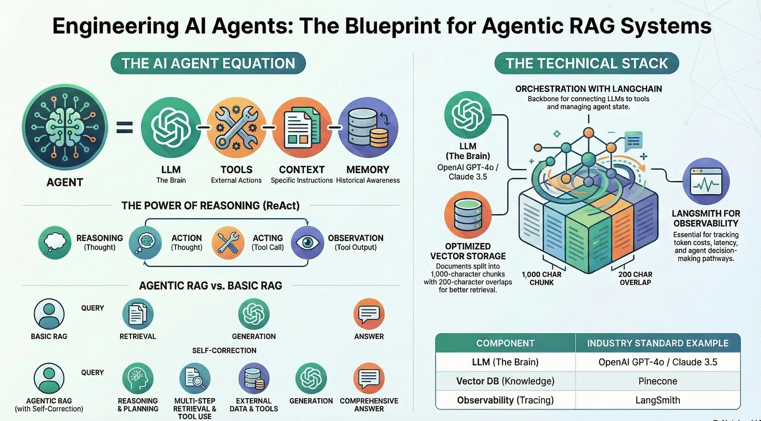
Building Agentic RAG Systems: Architecture, Reasoning Loops, and Production Considerations
The transition from simple LLM wrappers to AI Agents represents the next frontier in software engineering. While traditional Retrieval-Augmented Generation (RAG) improved LLM accuracy, Agentic RAG introduces a reasoning layer that allows the system to autonomously decide how to use data to solve a problem.

Houssem BEN SLAMA
ReAct FrameworkReAct Framework
+7+7

From Passive LLMs to Autonomous Agents: The Evolution of AI Workflows
The field of Artificial Intelligence is rapidly evolving from simple text generation to autonomous problem-solving. To understand where the industry is heading, technical professionals must distinguish between three distinct levels of AI implementation: Passive LLMs, AI Workflows, and Autonomous AI Agents.
Houssem BEN SLAMA